



Navigating Three Nations for World Cup 2026
The 2026 FIFA World Cup is making history by spanning three massive countries. For fans, this means the excitement is tripled, but so is the complexity of the commute. You might watch a group stage match in the heat of Monterrey and then fly to the cool harbors of Vancouver for the next. This unprecedented scale makes professional Cross-border travel tips more valuable than ever.
At worldcup-2026.info, our mission is to ensure you spend more time cheering and less time stuck at immigration. North America is vast. Unlike traveling within the Schengen Area in Europe, moving between the US, Canada, and Mexico involves distinct legal jurisdictions. Each country has its own entry rules, security protocols, and customs regulations.
To thrive during this month-long festival, you need a solid movement strategy. This isn’t just about booking a flight; it’s about understanding the friction points of international travel. From documentation to currency shifts, being prepared is the only way to stay ahead of the crowd. Let’s dive into the core Cross-border travel tips that will define your 2026 experience.

Documentation and Legal Cross-border Travel Tips
The most critical aspect of your trip is your “permission to enter.” Even though the tournament is a joint bid, there is no single “World Cup Visa” that covers all three nations. Each traveler must satisfy the individual requirements of the United States, Canada, and Mexico. This is the foundation of all Cross-border travel tips.
Understanding Visa Requirements
Check your passport’s expiration date now. Most countries require at least six months of validity beyond your stay. If you are from a visa-exempt country, you still likely need an Electronic Travel Authorization (eTA) for Canada or an ESTA for the US. Mexico has its own FMM (Forma Migratoria Múltiple) process. Missing one of these digital filings can end your trip before it starts.
Digital vs. Physical Copies
While the world is going digital, border agents still appreciate physical backups. Keep a folder with printed copies of your match tickets, hotel confirmations, and travel insurance. If your phone battery dies or the local network fails at a remote border crossing, these papers are your lifeline.
The FAN ID Factor
While FIFA often implements a Fan ID system, its integration with national border security varies. Stay updated on whether your match ticket acts as a secondary travel document. However, never assume it replaces a formal visa. Reliable Cross-border travel tips always prioritize official government travel sites over general rumors.
Transportation Logistics and Cross-border Travel Tips
Moving millions of people across borders simultaneously is a logistical mountain. The 16 host cities are grouped into regional clusters to help, but many fans will still travel long distances. Effective Cross-border travel tips focus on how you move between these zones efficiently.
Air Travel Between Host Cities
Expect airports like LAX, Pearson International, and Benito Juárez to be at 110% capacity. When flying across borders, arrive at least three to four hours early. Remember that even on a “domestic” North American route, you will pass through customs. For example, many Canadian airports offer US Pre-clearance, meaning you clear US Customs while still on Canadian soil.
Driving and Land Crossings
If you plan to rent a car, verify that your insurance covers international travel. Many US rental agreements prohibit taking the vehicle into Mexico. If you are driving from Seattle to Vancouver or from San Diego to Tijuana, land borders will be congested. One of our top Cross-border travel tips for drivers is to use the CBP Border Wait Times app to pick the quietest crossing window.
Regional Rail and Bus Options
While less common for long hauls, Amtrak and VIA Rail offer scenic border crossings between the US and Canada. These are often more relaxed than airports but require the same level of documentation. In the Travel section of our site, we provide specific routes that connect the major stadium hubs via ground transport.
Customs Compliance and Cross-border Travel Tips
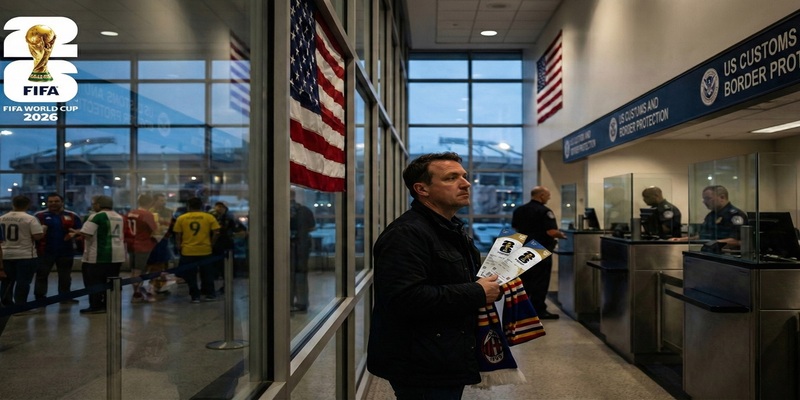
Every time you cross a border, you encounter customs. This isn’t just about your passport; it’s about what is in your suitcase. Fans often get caught off guard by simple items that are restricted in one country but not the other. This section of our Cross-border travel tips focuses on your belongings.
Prohibited Items
Be extremely careful with food, plants, and seeds. That apple you bought in a Dallas market could result in a fine at the Canadian border. Alcohol and tobacco have strict duty-free limits. If you are buying souvenirs in Mexico to bring back to the US, ensure they are not made from restricted materials.
Carrying Cash and Currency
You must declare if you are carrying more than $10,000 USD (or equivalent) in cash. While credit cards are widely accepted, having small amounts of local currency—USD, CAD, and MXN—is smart. Don’t rely solely on one payment method. A key part of modern Cross-border travel tips is notifying your bank of your travel dates so they don’t freeze your card during a stadium purchase.
Tech and Security
Border agents in North America have the authority to search electronic devices. While rare, it is a possibility. Ensure your devices are charged so you can turn them on if requested. Also, ensure your roaming plan is active or you have an eSIM ready for the next country before you land.
Cultural Nuances and Cross-border Travel Tips
Though the three nations are neighbors, the fan culture and local expectations differ. Part of successful Cross-border travel tips involves adapting your behavior to the local environment. This ensures a smoother interaction with local authorities and fans alike.
Language and Interaction
In Mexico, Spanish is the primary language. Learning basic phrases like “Where is the stadium?” or “I need help” goes a long way. In the US and Canada, English is dominant, but you’ll hear French in cities like Montreal. Being polite and patient at border checkpoints is the best of all Cross-border travel tips. Stress levels are high during the World Cup; don’t make the agent’s job harder.
Tipping and Service
Tipping cultures vary. It is standard in the US and Canada to tip 18-20% at restaurants. In Mexico, 10-15% is common. Understanding these “unwritten rules” helps you navigate the hospitality sector without friction.
Health and Insurance
Your domestic health insurance likely won’t cover you once you cross the line. Travel insurance is non-negotiable. Whether it’s a twisted ankle in a fan zone or a more serious issue, having international coverage is one of the most practical Cross-border travel tips we can offer. Make sure your policy specifically covers the three host countries.
Conclusion
The 2026 World Cup will be a test of endurance and organization. By following these Cross-border travel tips, you transform from a confused tourist into a savvy global fan. The distance between the stadiums is great, but the technology and infrastructure of North America make it manageable if you prepare in advance.
Remember that the rules can change as the tournament approaches. Governments often implement special measures for major events. Keep your documents organized, stay informed about customs, and always have a backup plan for transport. These Cross-border travel tips are designed to give you peace of mind.