


Reading the group stage table sounds simple. Points on the left, goal difference in the middle, qualification spots at the top. But the 2026 World Cup rewrites several rules fans thought they knew. Twelve groups replace the old eight. A third-placed finish can still keep you alive. And the table shifts faster than ever because 48 teams are playing simultaneously across three countries.
Before the first whistle blows on June 11, here’s everything you need to understand how it works — and why it matters more in 2026 than ever.
How the Group Stage Table Is Built
Every group stage table in 2026 follows a straightforward points system. A win earns three points. A draw gives one point to each side. A loss gives nothing.
Twelve groups of four teams each play a round-robin format. Every team faces the other three once. That means three matches per side before the group stage closes on June 27. After those three games, the group stage table is final and qualification spots are locked.
The top two teams from each group advance automatically. That produces 24 qualifiers from 12 groups. But in 2026, eight additional spots go to the best third-placed teams across all groups. So 32 teams total — not 16 — move into the knockout stage.

That single change makes reading the standings harder. A team sitting third with four points might still qualify. A team sitting second with three points might go home if other results go wrong. Context across all 12 groups matters from matchday one.
Tiebreakers That Decide the Group Stage Table
Ties in the standings are inevitable. When two or more teams finish level on points, FIFA applies tiebreakers in strict order.
First comes head-to-head points between the tied teams. If those teams drew their meeting, they stay tied and the next tiebreaker kicks in: head-to-head goal difference. Then head-to-head goals scored. If teams are still inseparable, overall goal difference across all group matches applies. Then overall goals scored. Then disciplinary record — yellow and red cards accumulated across the group stage.
If everything remains level after all of that, FIFA draws lots. That has happened before in World Cup history and it could happen again in 2026.
The practical takeaway: goal difference matters from the very first game. A team that wins 3–0 instead of 1–0 might finish above a rival on the group stage table even if both teams collect identical points. Late goals in “already decided” matches are rarely meaningless.
Groups to Watch on the Group Stage Table
Some groups will produce clear, predictable outcomes. Others will keep fans watching every scoreline until the final whistle of matchday three.
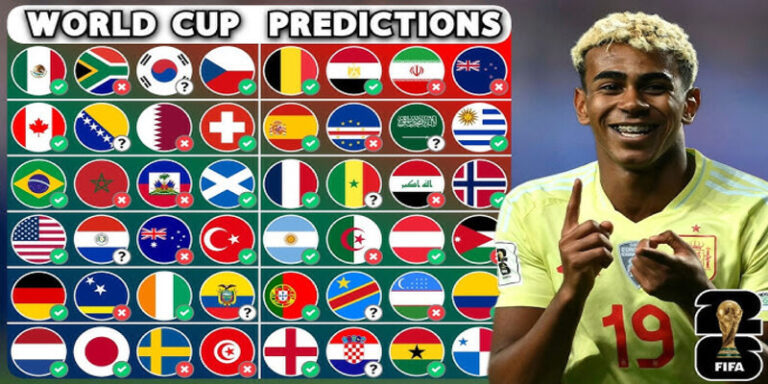
Group C features Brazil and Morocco — two sides that reached the 2022 semifinals. Scotland and Haiti complete the group. Brazil are heavy favourites to finish top, but Morocco will push hard for second.
Group D is the USA’s home group. Paraguay, Australia, and Türkiye (ranked 22nd) give this table genuine balance. All four teams can make a strong case for two of the three qualifying spots.
Group J has defending champions Argentina opening against Algeria in Kansas City. Argentina are expected to lead from the start, but a third-placed finish from this group still carries knockout potential.
Group L sees England face Croatia in a rematch of the 2018 semifinal. Panama and a qualifier from the European playoffs complete the group. England and Croatia are both capable of topping this table — but their head-to-head result could be the decisive tiebreaker if points level up.
Across all 12 groups, the pattern is consistent: the group stage table rewards consistency more than individual brilliance. One bad result can cost a team top spot and hand them a harder knockout draw.
The Third-Place Race Across All Groups
The eight best third-placed teams qualify for the Round of 32. That makes the cross-group third-place standings one of the most important — and most confusing — elements of the entire group stage table system.
Here is how it works. After all 12 groups finish their matchday three simultaneously, FIFA ranks every third-placed team by points. Ties are broken by goal difference, then goals scored, then disciplinary record. The top eight third-placed sides progress. The bottom four go home.
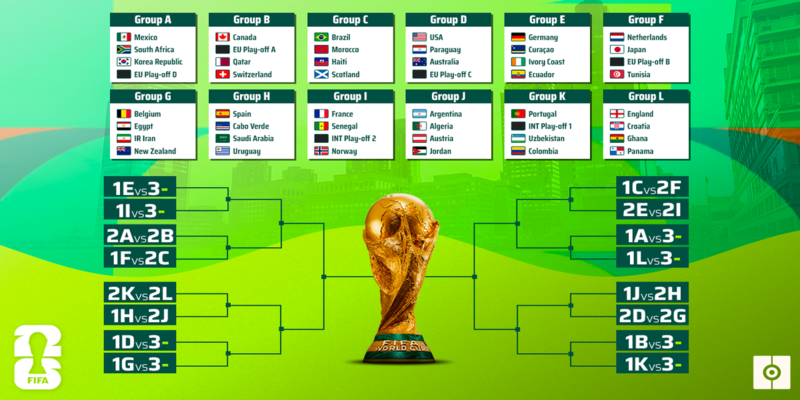
This cross-group table is harder to track in real time because fans need to watch multiple groups at once. A team sitting third in Group F needs to know what third-placed teams in Groups A, B, C, D, E, and others are doing simultaneously.
The key number to keep in mind: five points is almost certainly enough to qualify as a third-placed team in 2026. Four points might be enough if other third-placed teams underperform. Three points — one win, three matches — will almost never be enough unless goal difference is exceptional.
The expanded format means underdogs have a genuine second chance. A side that stumbles in game one but recovers to win games two and three can still qualify. That possibility adds tension to every match, even those that look decided on paper.
How to Read the Group Stage Table During the Tournament
The group stage table updates after every result. During this phase, multiple games run each day simultaneously. Scores in one stadium can change qualification mathematics in another group entirely, thanks to the cross-table third-place standings.
A few habits make following the standings easier across 39 days:
Track goal difference from day one. It is the most common tiebreaker and it separates teams in the standings more often than any other metric.
Watch the third-place table from matchday two onwards. By the time teams play their second group game, a clear picture of which third-place spots are competitive starts to emerge.
Check final matchday kickoff times. FIFA schedules the final group stage games in each group simultaneously to prevent teams from knowing exactly what result they need before kicking off. Both games in every group play at the same time on matchday three.
Convert times to your local zone. With matches across US, Canadian, and Mexican cities, kickoff times shift depending on the host venue. The official FIFA schedule at fifa.com lists all fixtures in UTC.
The 2026 group stage table is the most complex in World Cup history. Twelve groups, 48 teams, and a cross-group qualification system make it genuinely difficult to follow without a plan. But for fans willing to track it closely, it is also the most rewarding — because every number on the table means something right up until the final whistle of June 27.
That is when the table locks, the third-place rankings are confirmed, and the knockout bracket is set. Everything from July onward flows from what happens in the group stage first.