



The Psychological Weight of Historical Head-to-Head
In the high-stakes environment of international football, the past is never truly forgotten. Every time two nations walk onto the pitch, they carry the cumulative weight of every encounter they have shared over the decades. This is the core of a Historical head-to-head record. For the 2026 World Cup, these statistics are far more than mere trivia. They act as a psychological blueprint that can influence player confidence and dictate the complex strategies of world-class managers.
At worldcup-2026.info, we believe that analyzing the past is the most effective way to forecast future results. A deep dive into these all-time records reveals patterns that exist independently of current form. Some teams consistently struggle against specific opponents, regardless of their position in the global rankings. This “bogey team” phenomenon is a recurring theme throughout tournament history. When a squad is aware they haven’t defeated a specific rival in thirty years, it creates a mental barrier that is difficult to overcome.

The 2026 tournament will feature an array of classic matchups. Whether it is a fierce South American derby or a technical European clash, the Historical head-to-head will be a primary talking point for broadcasters and fans. Supporters often cite these records to prove their team’s historical superiority. Meanwhile, professional analysts use them to identify tactical trends that tend to repeat over generations. It is a fascinating layer of the sport that adds significant depth to every ninety-minute battle on the field.
Decoding Rivalries Through the Historical Head-to-Head
Certain rivalries are so intense that they define entire eras of the beautiful game. When we examine the data between giants such as Brazil and Italy, we see a rich story of tactical evolution. These teams have met in finals and high-pressure knockout rounds, creating a legacy of drama. The Historical head-to-head data shows us which nations thrive under extreme pressure and which ones falter when the eyes of the world are watching.
During the group stages, these all-time records can dictate how a head coach approaches a specific game. If a nation possesses a dominant winning record against their opponent, they are statistically more likely to play with heightened aggression. Conversely, a team with a poor Historical head-to-head might adopt a more conservative, defensive stance to avoid adding another defeat to their record. These mental games are played long before the referee blows the whistle to start the match. It is a constant battle between tradition and new ambition.
You can explore these legendary matchups in depth within our Teams section. We provide a comprehensive archive of every major encounter between the 48 qualifying nations. We don’t just list the final scores; we look at the specific context of each Historical head-to-head. Was the match a friendly or a World Cup quarter-final? These details are vital because they shape the narrative of the 2026 matches. Every goal scored in 1970 or 1994 still resonates in the collective memory of the supporters today.
Statistical Anomalies in Historical Head-to-Head Data
One of the most intriguing aspects of international football is the statistical outlier. Occasionally, a smaller nation maintains a surprisingly strong Historical head-to-head against a global powerhouse. These anomalies often occur because of specific tactical styles that clash in unique ways. For instance, a team that relies on a heavy physical presence might always trouble a side that prefers technical, short-passing football. This makes these statistics an essential tool for both fans and tacticians.
As we analyze the potential results for the 2026 participants, we notice several “giant-killer” patterns. Certain African nations have historically performed exceptionally well against European giants. These records provide the underdogs with the genuine belief that they can cause a massive upset on the world stage. A positive Historical head-to-head acts as a mental shield for a smaller team, protecting them from being intimidated by an opponent’s international reputation.
However, it is important to remember that these legacy stats can sometimes be misleading. The world of football changes at a rapid pace. A record established in the 1980s might not necessarily apply to a modern squad filled with young superstars playing in different systems. This is why we evaluate recent performance alongside the all-time Historical head-to-head data. This approach provides a more balanced view of what to expect during the summer in North America. We look for the exact moment where a trend begins to shift, signaling the start of a new era.
Predicting 2026 Outcomes Using Historical Head-to-Head
How can fans utilize these metrics to make more accurate predictions? It begins by examining the “venue” factor. Many national teams perform differently depending on the geographical location of the match. The 2026 tournament spans three massive countries with varying climates. If a team has a strong Historical head-to-head in matches previously played in North America, they might hold a hidden advantage. This context is a vital component of modern sports science.
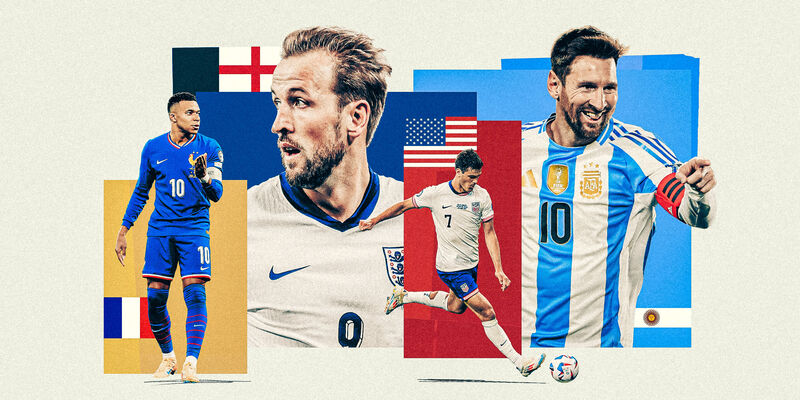
Managers also frequently use the Historical head-to-head to motivate their squads. A coach might utilize a past defeat to ignite a desire for revenge among the players. Alternatively, they might highlight a long winning streak to instill a sense of invincibility. It is a powerful psychological weapon. In a massive tournament like the 2026 World Cup, every small edge matters. The history books are filled with examples of teams that won simply because they believed the “ghosts of the past” were supporting them.
We also track these specific statistics regarding individual managers. Some coaches seem to have a “hex” over their counterparts, consistently winning tactical duels regardless of the players on the pitch. When you combine individual player stats with the manager’s history, the Historical head-to-head becomes a multidimensional map. It reveals where the vulnerabilities lie and where the strengths are hidden. It is the ultimate guide for anyone who wants to understand the deeper reasons behind a final result.
Conclusion
In conclusion, the Historical head-to-head is the heartbeat of international football competition. It serves as the bridge connecting the legends of the past with the rising stars of today. While the 2026 World Cup will introduce new stadiums, expanded formats, and modern technology, the spirit of the game remains firmly rooted in these ancient rivalries. These records remind us that every match is merely a new chapter in a very long and passionate story.
At worldcup-2026.info, we are committed to bringing you the stories that exist behind the scoreboard. We believe that a match is much more than just ninety minutes of play; it is a continuation of a national legacy. By studying the Historical head-to-head, you can observe the tournament with much clearer eyes. You will understand why a draw feels like a monumental victory for some, and why a win feels like a preordained destiny for others.